Behavioral 
Therapies
Help people in drug addiction treatment modify their attitudes and behaviors related to drug use. As a result, patients are able to handle stressful situations and various triggers that might cause another relapse. Behavioral therapies can also enhance the effectiveness of medications and help people remain in treatment longer. Stopping drug use is just one part of a long and complex recovery process
- Cognitive-behavioral therapy seeks to help patients recognize, avoid, and cope with the situations in which they’re most likely to use drugs.
- Contingency management uses positive reinforcement such as providing rewards or privileges for remaining drugfree, for attending and participating in counseling sessions, or for taking treatment medications as prescribed.
- Motivational enhancement therapy uses strategies to make the most of people’s readiness to change their behavior and enter treatment.
- Family therapy helps people (especially young people) with drug use problems, as well as their families, address influences on drug use patterns and improve overall family functioning.
- Twelve-step facilitation (TSF) is an individual therapy typically delivered in 12 weekly sessions to prepare people to become engaged in 12-step mutual support programs. 12-step programs, like Alcoholic Anonymous, are not medical treatments, but provide social and complementary support to those treatments. TSF follows the 12-step themes of acceptance, surrender, and active involvement in recovery.
There is no one singular treatment
that works for everyone.
Below is a list of common medications used to treat drug addiction and withdrawal:
Opioid
- Methadone
- Buprenorphine (Suboxone)
- Extended-release naltrexone
- Lofexidine
Alcohol
- Naltrexone
- Disulfiram
- Acamprosate
Just like people, treatments and recovery paths are unique to the individual. In addition to the above, there are also paths that include spirituality, physical and mental conditioning, and Medications for Opioid Use Disorder and Substance Use Disorder. (MOUD or MAT) Medications
Recovery Is For Everyone
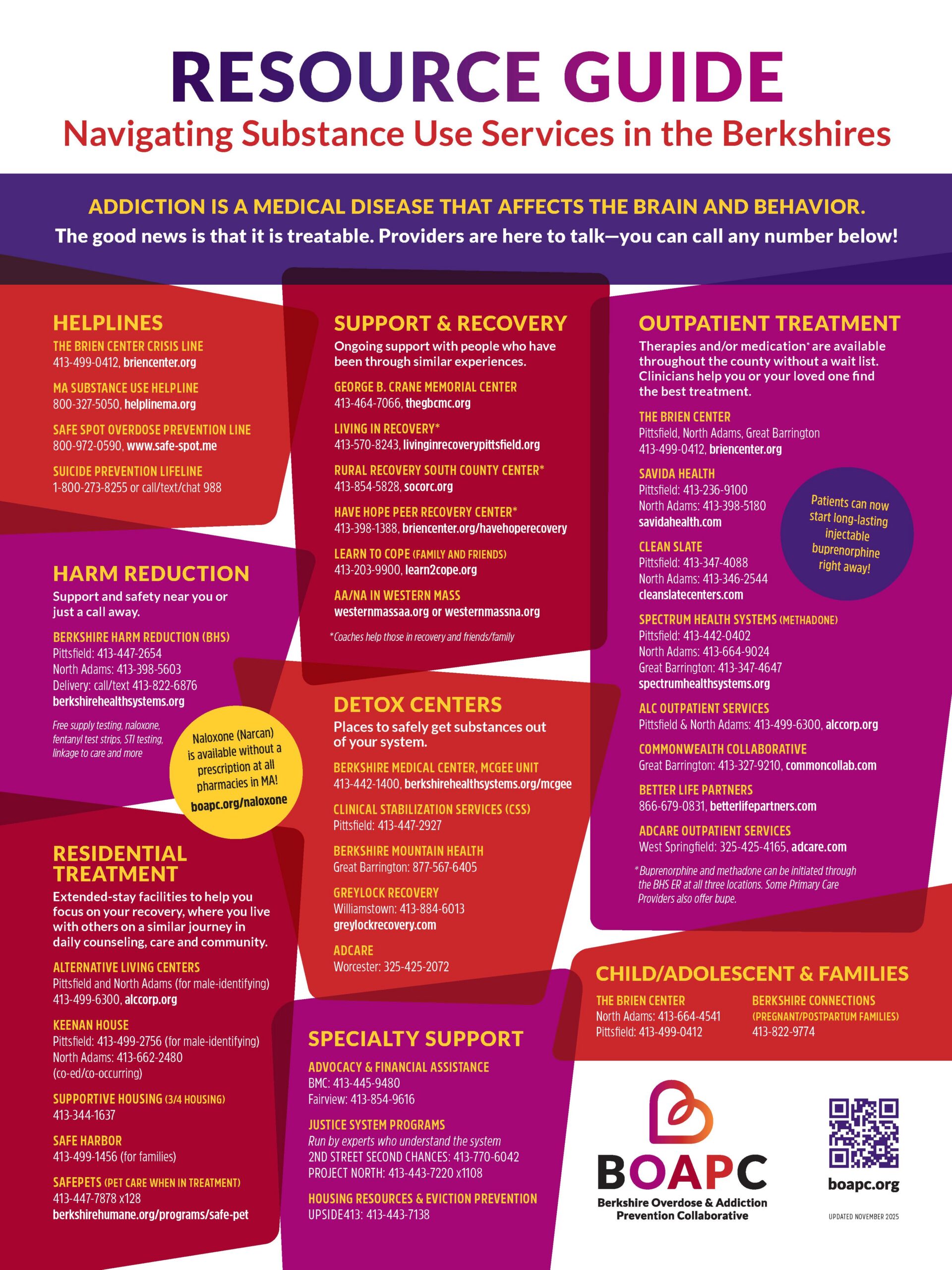
Medication for Opioid Use Disorder (MOUD) Centers
Brien Center
333 East St.
Pittsfield, MA
413-499-0412
60 Cottage Street
Great Barrington, MA
124 American Legion Drive
North Adams, MA
Spectrum Health Systems (methadone)
390 Merrill Rd.
Pittsfield, MA
413-442-0402
1274 Curran Highway
North Adams, MA
413-664-9024
290 Park St,
Great Barrington, MA
413-347-4647
Clean Slate
53 Eagle St
Pittsfield, MA
413-347-4088
Savida Health
184 North St.
Suite 202
Pittsfield, MA
413-236-9100
77 Hospital Ave.
North Adams, MA
413-398-5180
Understanding
DETOX
Detox is the complete cessation of substance use, allowing the body to naturally purge toxins. While it seems simple enough, it can be both physically and emotionally challenging—particularly for individuals with a history of heavy or prolonged substance use.
Professional detox programs offer continuous monitoring, symptom management, and support to ensure a safer and more comfortable experience. It is never recommended to detox at home or in a non-supervised manner.
Withdrawal symptoms may emerge during this period, ranging from mild to severe. Symptoms may include nausea and vomiting, sweating and chills, tremors, anxiety and irritability and headaches. Your loved one may also experience insomnia and in some severe cases hallucinations, severe agitation and even seizures.
Community Along the Way
Recovery Centers
A recovery center is a place where individuals can go for support, additional treatments and to find others with similar lived experiences. Many people in recovery find that engaging with others who can relate directly to their own feelings and experiences, helps to support their recovery process.
In Patient– In patient recovery is when a person with SUD goes into a residential program that is designed for 30, 60 days or longer. They live in the facility where they are receiving their treatments.
Out Patient– A person may attend an outpatient center where they go once a day, once a week, or depending upon their treatments may go more often for therapy, group support meetings, medication or other purposes related to their recovery journey.
Peer Recovery– Peer Recovery Centers are run and led by people who themselves have lived experience and are in recovery from addiction. Often times these peer centers are managed and governed by consensus and rules that are built by the community. They often have a full calendar of events including both recovery related events and community based events that do not include alcohol or substances.
Alternative Living Centers– Typically are community-based, structured residential facility for adults transitioning out of addiction recovery programs or as part of their recovery journey. Rather than functioning as an institution, they provide safe, drug-free, and peer-supported environments designed to help residents rebuild life skills, maintain sobriety, and re-enter the workforce or community.